
Male Pelvic Floor Dysfunction, Hip Tightness, and Low Back Pain
Updated: Oct 8
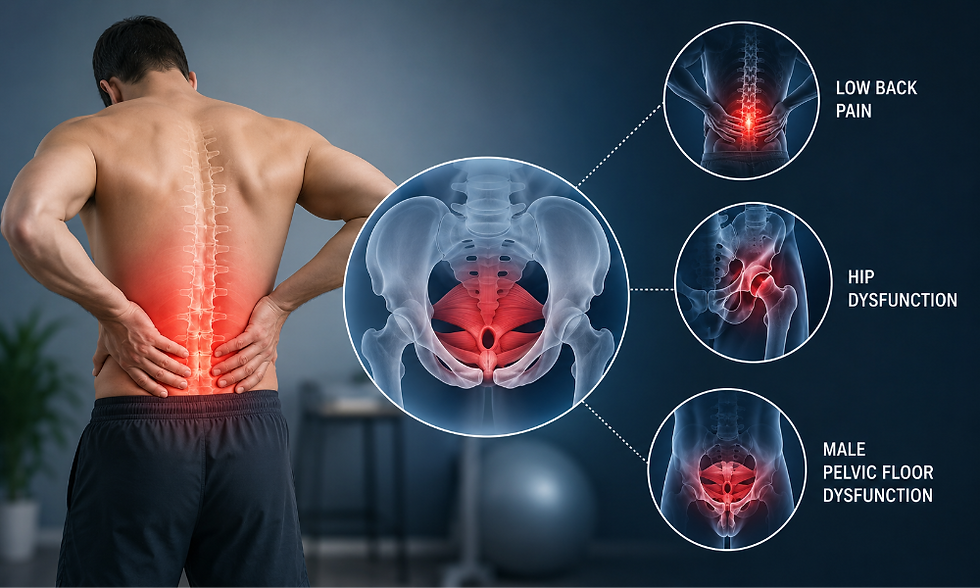
Low back pain and hip tightness are common complaints among men, especially those with physically demanding jobs, prolonged sitting, athletic training, or high stress levels. However, many men do not realize that the pelvic floor can also play a major role in these symptoms.
The pelvic floor works closely with the deep abdominal muscles, diaphragm, hips, and spine to support posture, movement, breathing, bladder control, and core stability. When dysfunction develops in one area, the rest of the body often compensates.
At Uniphysio & Associates, we provide physiotherapy treatment for male pelvic floor dysfunction in Oakville and Mississauga through individualized one-on-one care designed to address the body as a connected system.
What Is Male Pelvic Floor Dysfunction?
The pelvic floor is a group of muscles located at the base of the pelvis. These muscles help support the bladder and bowel, contribute to sexual health, assist with breathing mechanics, and stabilize the lower back and hips during movement.
Male pelvic floor dysfunction occurs when these muscles become:
Too tight
Weak
Poorly coordinated
Overworked
Unable to relax properly
This dysfunction may contribute to symptoms affecting the lower back, hips, pelvis, bladder, and even athletic performance.
The Connection Between Low Back Pain and the Pelvic Floor
The pelvic floor and lower back function as part of the body’s deep stabilization system. When the pelvic floor becomes tense or weak, the lower back muscles may compensate, creating excessive strain and altered movement patterns.
Men with male pelvic floor dysfunction may experience:
Chronic low back pain
Tightness across the pelvis
Tailbone discomfort
Pain when sitting
Core weakness
Groin tension
Pain after exercise
Reduced flexibility
Hip stiffness
In some cases, chronic low back pain may continue despite stretching or strengthening programs because the pelvic floor dysfunction has not been addressed.
How Hip Tightness Can Affect the Male Pelvic Floor
The hips and pelvic floor are mechanically connected through surrounding muscles and fascia. Tight hip flexors, weak glute muscles, and limited hip mobility can increase tension throughout the pelvis and lower back.
Common contributing factors include:
Long hours of sitting
Desk work
Driving
Heavy lifting
Sports training
Poor posture
Core instability
Stress and muscle guarding
Over time, restricted hip movement may place additional pressure on the pelvic floor muscles, leading to discomfort and altered movement patterns.
Common Symptoms of Male Pelvic Floor Dysfunction
Symptoms may vary from person to person and are often misunderstood or overlooked.
Common symptoms include:
Low back pain
Hip tightness
Pelvic tension
Groin pain
Tailbone pain
Urinary urgency
Frequent urination
Urinary leakage
Constipation
Pain with prolonged sitting
Sexual dysfunction
Pain during or after physical activity
Because these symptoms are interconnected, a whole-body assessment is often important to identify the root cause.
How Physiotherapy Can Help Male Pelvic Floor Dysfunction
At Uniphysio & Associates, treatment focuses on understanding the relationship between the pelvic floor, hips, core, breathing mechanics, and lower back.
Assessment may include:
Posture analysis
Core stability testing
Hip mobility assessment
Breathing pattern evaluation
Movement analysis
Muscle tension and coordination testing
Treatment may involve:
Manual therapy
Pelvic floor muscle retraining
Hip and core strengthening
Mobility exercises
Breathing retraining
Postural correction
Education on movement habits
BioFlex Laser Therapy when appropriate
Each treatment plan is individualized based on the patient’s symptoms, goals, and comfort level.
Why Early Treatment Matters
Many men delay seeking help because pelvic floor symptoms are often difficult to recognize or discuss. However, untreated dysfunction can contribute to ongoing pain, movement limitations, and worsening compensation patterns over time.
Early treatment may help improve mobility, reduce pain, improve core function, and restore confidence during daily activities, exercise, and work.
Male Pelvic Floor Physiotherapy in Oakville and Mississauga
At Uniphysio & Associates, we provide one-on-one physiotherapy treatment for male pelvic floor dysfunction, low back pain, hip tightness, pelvic discomfort, and related symptoms.
Our team focuses on individualized care designed to support long-term recovery, movement, and overall function.
Book an Appointment
If you are experiencing low back pain, hip tightness, pelvic discomfort, or urinary symptoms, our team is here to help.
Contact Uniphysio & Associates to learn more about treatment for male pelvic floor dysfunction or to book an assessment today.
Or Call Us today!
(905) 997-1677


