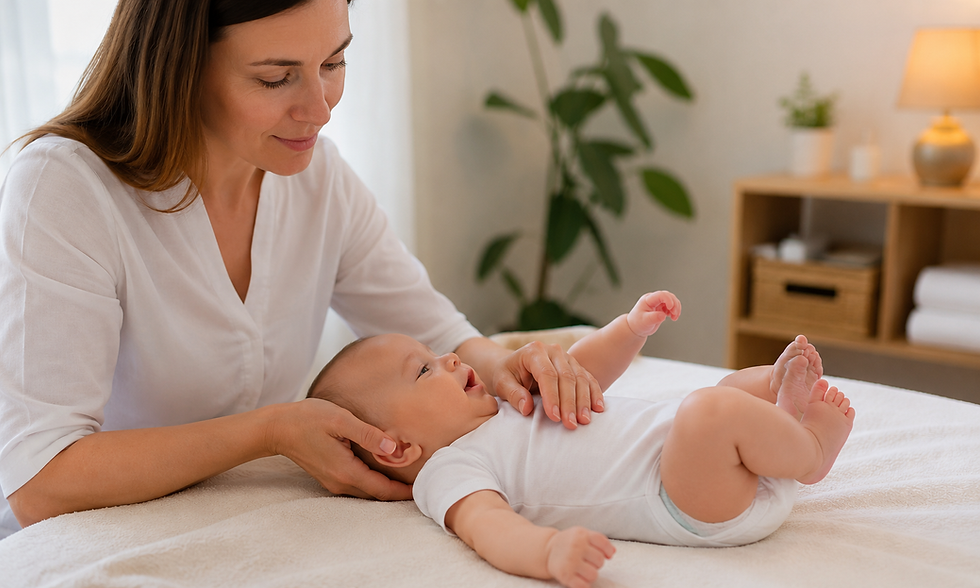
Low Back Pain After Pregnancy: Causes, Treatment, and How Physiotherapy Can Help
- 7 hours ago
- 3 min read

Low Back Pain After Pregnancy: Why It Happens and How to Recover
Many new mothers expect sleepless nights and endless diaper changes—but few anticipate the persistent low back pain after pregnancy that can last for months or even years.
If your back hurts every time you lift your baby, feed your newborn, or get out of bed, you're not alone. Research suggests that nearly half of women experience ongoing back pain after childbirth.
The good news? Most cases respond very well to targeted physiotherapy once the underlying cause is identified.
Why Does Low Back Pain After Pregnancy Occur?
Pregnancy places significant stress on the entire musculoskeletal system. Even after delivery, your body continues to recover from months of physical and hormonal changes.
Common contributors include:
Weak deep core muscles
Pelvic floor dysfunction
Diastasis recti (abdominal separation)
Hormonal ligament laxity
Poor lifting mechanics
Breastfeeding posture
Carrying your baby on one side
Sleep deprivation and muscle fatigue
Reduced hip and thoracic mobility
Often, several of these factors occur together.
Common Symptoms of Low Back Pain After Pregnancy
Every woman experiences symptoms differently, but common complaints include:
Pain across the lower back
Sharp pain when lifting the baby
Difficulty standing after sitting
Pain when rolling in bed
Morning stiffness
Pain while breastfeeding
Pain after walking
Hip or pelvic discomfort
Feeling unstable during movement
Difficulty returning to exercise
If symptoms persist beyond six weeks postpartum, they should be assessed by a physiotherapist.
The Hidden Connection Between Your Core and Low Back Pain After Pregnancy
Many people believe "weak abs" are the main problem.
In reality, recovery depends on how well the following systems work together:
Deep abdominal muscles (Transversus Abdominis)
Pelvic floor
Diaphragm
Multifidus muscles
Hip stabilizers
Gluteal muscles
When these muscles lose coordination, the spine receives less support, increasing strain during everyday activities.
Physiotherapy focuses on restoring this coordination—not simply strengthening muscles.
How Diastasis Recti Can Contribute to Low Back Pain
Diastasis recti is the separation of the abdominal muscles during pregnancy.
Although many women heal naturally, some continue to experience:
Poor abdominal control
Reduced trunk stability
Difficulty lifting
Lower back pain
Pelvic pressure
Treatment focuses on restoring tension across the abdominal wall rather than simply "closing the gap."
The Pelvic Floor and Low Back Pain
The pelvic floor works closely with your deep core muscles.
If it becomes weak or overactive after childbirth, it can contribute to:
Low back pain
Pelvic pain
Urinary leakage
Pain during exercise
Feelings of instability
A pelvic floor physiotherapy assessment can identify these issues and guide safe rehabilitation.
Daily Habits That May Be Making Your Pain Worse
Small movements repeated hundreds of times each day can overload the lower back.
Common examples include:
Lifting the baby with a rounded back
Carrying the baby on one hip
Leaning forward while breastfeeding
Looking down during bottle feeding
Bending over the crib
Pushing a stroller with poor posture
Sleeping in awkward positions
Correcting these habits often provides significant relief.
How Physiotherapy Treats Low Back Pain After Pregnancy
Treatment is individualized and may include:
Manual Therapy
Gentle techniques to improve spinal, pelvic, and hip mobility while reducing muscle tension.
Core Rehabilitation
Progressive activation of the deep abdominal muscles and spinal stabilizers.
Pelvic Floor Rehabilitation
Assessment and treatment of weakness, overactivity, or poor muscle coordination.
Postural Retraining
Improving posture during feeding, lifting, carrying, and everyday tasks.
Strength and Functional Exercise
Gradual return to activities that mimic daily life and parenting demands.
Education
Learning proper movement strategies helps reduce strain and prevent recurring pain.
When Should You See a Physiotherapist?
Consider booking an assessment if you have:
Pain lasting longer than six weeks postpartum
Difficulty lifting your baby
Pain during walking
Persistent pelvic or hip pain
Urinary leakage
Diastasis recti concerns
Difficulty returning to exercise
Pain affecting sleep or daily activities
Early treatment often leads to faster recovery.
Can Low Back Pain After Pregnancy Be Prevented?
While not all postpartum pain can be prevented, you can reduce your risk by:
Strengthening your core safely
Improving lifting mechanics
Restoring pelvic floor function
Maintaining good posture
Returning to exercise gradually
Addressing symptoms early instead of waiting months
Why Choose Uniphysio & Associates?
At Uniphysio & Associates, we take a whole-body approach to low back pain after pregnancy.
Our physiotherapists assess:
Core muscle function
Pelvic floor coordination
Hip mobility
Posture
Breathing mechanics
Lifting patterns
Daily movement habits
Treatment is individualized to help you return to caring for your baby with greater comfort, confidence, and strength.
Final Thoughts
Low back pain after pregnancy is common, but it shouldn't become your new normal. With the right assessment and treatment, most women experience significant improvements in pain, movement, and quality of life.
If you're struggling with persistent postpartum back pain, early physiotherapy can help identify the underlying causes and support a safe, lasting recovery.
Or Call Us today!
(905) 997-1677