
How Physiotherapy for Ligament Injuries Can Speed Up Recovery and Prevent Reinjury
Updated: Jul 22
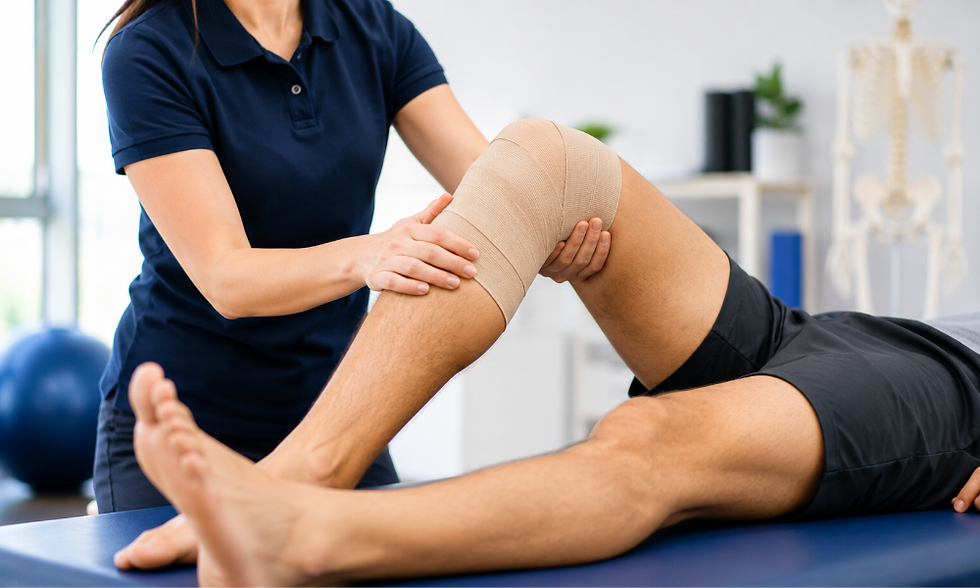
Physiotherapy for Ligament Injuries: Everything You Need to Know
Ligament injuries are among the most common musculoskeletal injuries, affecting athletes and non-athletes alike. Whether you've twisted your ankle, injured your knee during sports, or sprained your wrist from a fall, physiotherapy for ligament injuries plays a crucial role in restoring function, improving stability, and reducing the risk of long-term complications.
Many people assume that simply resting is enough. However, without proper rehabilitation, ligaments may heal with decreased strength, poor joint stability, and an increased risk of reinjury.
What Are Ligaments?
Ligaments are strong bands of connective tissue that connect one bone to another. Their primary role is to stabilize joints while allowing controlled movement.
Some of the most commonly injured ligaments include:
Anterior Cruciate Ligament (ACL)
Medial Collateral Ligament (MCL)
Lateral Ankle Ligaments (ATFL, CFL)
Wrist Ligaments
Thumb Ulnar Collateral Ligament (Skier's Thumb)
Shoulder Ligaments
When a ligament is stretched beyond its normal limits, it can become partially or completely torn.
Common Causes of Ligament Injuries
Most ligament injuries occur due to sudden or excessive forces on a joint.
Common causes include:
Sports injuries
Twisting movements
Falls
Motor vehicle accidents
Sudden changes in direction
Poor landing mechanics
Uneven surfaces
Individuals with previous ligament injuries may also be at greater risk of reinjury.
Symptoms of a Ligament Injury
Symptoms vary depending on the severity of the injury but commonly include:
Sudden pain
Swelling
Bruising
Joint instability
Difficulty bearing weight
Limited range of motion
Tenderness around the joint
A feeling that the joint may "give way"
If you experience severe instability or cannot bear weight, medical assessment is recommended promptly.
Grades of Ligament Injuries
Grade I (Mild Sprain)
Ligament is stretched
Mild pain and swelling
Minimal instability
Grade II (Moderate Sprain)
Partial ligament tear
Moderate swelling and bruising
Noticeable instability
Grade III (Severe Sprain)
Complete ligament rupture
Significant instability
Often requires orthopedic assessment and, in some cases, surgery.
Why Physiotherapy for Ligament Injuries Is So Important
Although ligaments heal naturally, they often heal with weaker tissue if not properly rehabilitated.
Physiotherapy for ligament injuries helps:
Reduce pain and inflammation
Restore joint mobility
Improve joint stability
Rebuild muscle strength
Improve balance and proprioception
Restore normal movement patterns
Prevent recurrent injuries
Safely return patients to sports and daily activities
Early rehabilitation often leads to better long-term outcomes.
How Physiotherapy for Ligament Injuries Works
Every treatment plan is individualized based on the injured ligament and the stage of healing.
Treatment may include:
1. Manual Therapy
Hands-on techniques help improve joint mobility, reduce stiffness, decrease muscle tension, and restore normal movement.
2. Therapeutic Exercise
Progressive strengthening focuses on:
Surrounding muscles
Joint stabilization
Functional movement
Return-to-sport exercises
3. Balance and Proprioception Training
After a ligament injury, your body's ability to sense joint position decreases.
Physiotherapists use balance exercises to retrain:
Coordination
Stability
Neuromuscular control
Reaction time
This significantly reduces the risk of future injuries.
4. Range of Motion Exercises
Maintaining appropriate mobility helps prevent joint stiffness while respecting the natural healing process.
5. BioFlex Laser Therapy
At Uniphysio & Associates, BioFlex Laser Therapy may be incorporated into your rehabilitation program to help reduce pain, decrease inflammation, and support the body's natural healing process during recovery.
How Long Does Recovery Take?
Recovery depends on the severity of the injury.
Approximate recovery times include:
Grade I: 2–6 weeks
Grade II: 6–12 weeks
Grade III: 3–9 months (or longer if surgery is required)
A structured rehabilitation program is often more important than simply waiting for pain to resolve.
Can Ligament Injuries Heal Without Physiotherapy?
While some mild ligament injuries may heal with rest, many patients continue to experience:
Chronic pain
Recurrent sprains
Joint instability
Weakness
Reduced confidence during activity
Physiotherapy for ligament injuries helps restore proper movement and significantly lowers the chance of future injuries.
When Should You See a Physiotherapist?
You should seek assessment if you have:
Persistent swelling
Joint instability
Difficulty walking
Recurrent sprains
Reduced strength
Pain lasting more than a few days
Difficulty returning to work or sports
Early intervention often results in a faster and more complete recovery.
Take the First Step Toward Recovery
Whether you've sprained your ankle, injured your knee, or strained a wrist ligament, the right rehabilitation can make all the difference.
At Uniphysio & Associates, our experienced physiotherapists provide individualized treatment plans designed to reduce pain, restore stability, and help you safely return to the activities you love.
Don't let a ligament injury become a long-term problem—early physiotherapy can help you recover stronger and reduce the risk of reinjury.
Or Call Us today!
(905) 997-1677


