Jaw Pain After Radiotherapy: How Physiotherapy Helps Reduce Stiffness & Restore Comfort
- Nov 25, 2025
- 3 min read

Radiotherapy is a powerful treatment for many head and neck cancers, but it often leaves patients with long-term side effects — the most common being jaw pain and stiffness after radiotherapy, known clinically as trismus.
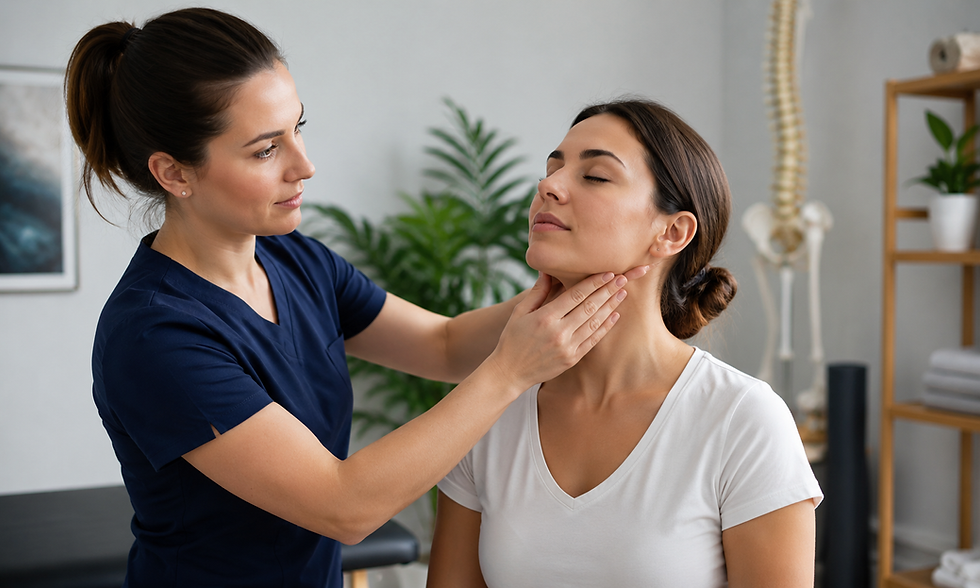
At Uniphysio & Associates in Oakville–Mississauga, our TMJ physiotherapy program is designed to gently restore mobility, reduce pain, and help you feel more like yourself again. Our TMJ specialist, Elaine Ruz, provides safe, targeted care for post-radiation patients.
Why Does Jaw Pain After Radiotherapy Happen?
Many patients develop jaw pain after radiotherapy because radiation can affect:
The TMJ joint itself
Surrounding muscles
Soft tissues
Nerves and lymph nodes
Neck and throat structures
After radiation, tissues can become:
Tight
Fibrotic
Less elastic
Painful to move
Sensitive to pressure
These changes often lead to limited mouth opening, pain while chewing, and persistent stiffness.

Common Symptoms of Jaw Pain After Radiotherapy
You may experience:
Tightness or difficulty opening your mouth
Pain when chewing, talking, or yawning
Clicking or popping in the jaw
Jaw shifting while opening
Neck stiffness and swallowing discomfort
Facial muscle tension
Headaches or ear pressure
If any of these sound familiar, targeted physiotherapy can provide significant relief.
How Physiotherapy Helps Jaw Pain After Radiotherapy
At Uniphysio, we use gentle, specialized techniques tailored for post-radiation tissues that may be sensitive or fibrotic.
1. TMJ Mobilization for Jaw Pain After Radiotherapy
Controlled, safe joint techniques help:
Improve mouth opening
Reduce stiffness
Enhance smooth jaw movement
Decrease pressure on surrounding structures
2. Soft Tissue Release for Radiation-Induced Tightness
Radiation often creates dense, tight bands of muscle or fascia.
We safely treat:
Masseter & temporalis
SCM, scaleni, upper traps
Suprahyoid & infrahyoid muscles
Internal pterygoids
This helps reduce discomfort and improve mobility.
3. Targeted Exercises for Jaw Pain After Radiotherapy
A personalized home program may include:
Mouth opening exercises
Controlled jaw glides
Stretching for tight tissues
Strengthening weak muscles
Posture and breathing training
These exercises help restore balance and function.
4. Neck & Postural Physiotherapy
Because radiotherapy often affects the neck, we address:
Cervical mobility
Shoulder mechanics
Postural alignment
Breathing techniques
Improving these areas directly supports TMJ function.
5. Bio Flex Laser Therapy
For patients who can safely receive it, Bio Flex Laser:
Reduces inflammation
Softens fibrosis
Improves circulation
Supports tissue healing
Helps restore mobility
It is gentle, non-invasive, and well tolerated.
Is It Safe to Treat Jaw Pain After Radiotherapy With Physiotherapy?
Yes — when performed by a trained TMJ physiotherapist experienced with oncology-related conditions.
At Uniphysio, we carefully assess:
Tissue sensitivity
Stage of healing
Lymphatic involvement
Scar tissue
Pain patterns
Jaw and neck mobility
Your plan is personalized and always safe.
Expected Improvements for Jaw Pain After Radiotherapy
Most patients notice changes within 2–4 sessions, including:
Better mouth opening
Less stiff jaw movement
Reduced pain
Easier chewing and speaking
Improved neck mobility
Overall better quality of life
Long-term consistency leads to long-lasting results.
When to Seek Help for Jaw Pain After Radiotherapy
Book an assessment if you notice:
Difficulty opening your mouth
Increased chewing or talking pain
Facial or neck tightness
Clicking, shifting, or locking
Pain lasting more than 2 weeks
Early treatment prevents symptoms from worsening.
Get Expert Care for Jaw Pain After Radiotherapy in Oakville–Mississauga
Jaw pain and stiffness after radiotherapy can feel overwhelming — but you don’t have to navigate it alone.
At Uniphysio & Associates, we provide gentle, personalized TMJ physiotherapy that supports healing, restores comfort, and helps you return to daily activities with confidence.
Or Call Us today!
(905) 997-1677