
How TMJ Physiotherapy Helps Oncologic Patients Facing Temporomandibular Disorders (TMD)
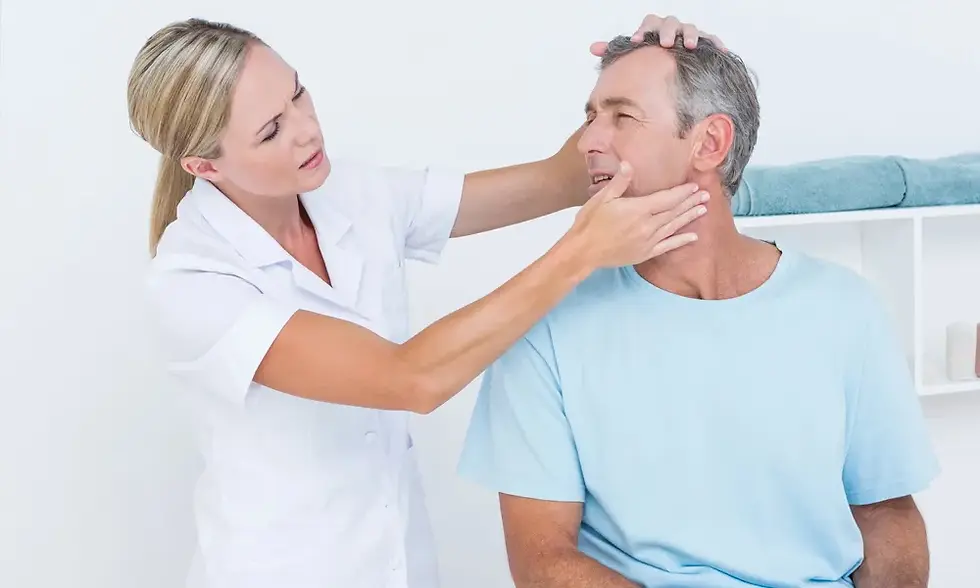
According to global cancer data, nearly 1 million people worldwide are affected annually by head-and-neck cancer. In Canada alone, approximately 8,100 new cases are diagnosed each year, according to the Canadian Cancer Society (2025). Fortunately, diagnosis and treatment options have advanced significantly over the past decades, offering patients better outcomes and improved quality of life. However, cancer treatments can still affect everyday functions we often take for granted, such as chewing, speaking clearly, yawning, or turning the head comfortably, frequently leading patients to develop Temporomandibular Disorders (TMD). Surgery, chemotherapy, and especially radiotherapy can leave the jaw and neck feeling tight, sore, and weak. As a result, many patients develop trismus (difficulty opening the mouth), jaw pain, and muscle stiffness that interfere with eating, speaking, maintaining oral hygiene, and overall comfort.
The good news is that TMJ physiotherapy can play a major role in helping patients regain mouth and neck function and relieve temporomandibular disorders. In addition, laser therapy is now widely used to support the healing of painful mouth sores (oral mucositis) caused by cancer treatment, helping patients eat, drink, and speak more comfortably.
At Uniphysio, you can count on our team of TMJ physiotherapists, led by Elaine Ruz, who has over 15 years of experience treating temporomandibular disorders (TMD) and myofascial pain using manual therapy and BIOFLEX laser therapy.
What you can find in this article:
Understanding TMD, TMJ and Why Does Cancer Treatment Affect It?

The TMJ (temporomandibular joint) is the small, complex joint that connects your lower jaw (mandible) to your skull, just in front of your ear. It works together with many muscles and nerves in your face, head, and neck to let you talk, chew, swallow, yawn, and smile. TMD (temporomandibular disorder) refers to any condition that affects the TMJ or the muscles around it, causing pain, stiffness, limited movement, or difficulty coordinating normal jaw functions.
Cancer treatments, especially those targeting the head and neck, can contribute to TMD, affecting the TMJ and the surrounding muscles in several ways:
Surgery may remove or disturb tissues around the jaw, tongue, or neck, leaving scar tissue and muscle weakness.
Radiotherapy and chemoradiation can cause fibrosis, a thickening and stiffening of soft tissues over time, leading to reduced mouth opening, jaw tightness, and pain.
Neck and shoulder muscles can become weak and tight, which changes posture and puts extra stress on the TMJ.
All of this can lead to:
Difficulty opening the mouth wide (trismus)
Pain when chewing, talking, or yawning
Problems swallowing or cleaning the teeth and gums
Stiffness and pain in the neck and shoulders, making it hard to turn the head or look up and down
Why TMJ Physiotherapy Matters in Head-and-Neck Rehabilitation
International guidelines and large cancer centers now highlight physiotherapy as an essential part of care for people treated for head-and-neck cancers, helping them live well: eating, talking, and moving as comfortably and independently as possible.
A physiotherapist who understands TMJ and orofacial conditions can help:
Maintain or improve mouth opening through safe jaw exercises and stretches, reducing the risk or severity of trismus.
Ease jaw pain and muscle tension with gentle hands-on techniques to the jaw, face, and neck.
Restore neck and shoulder mobility and strength, which supports good posture and reduces extra strain on the TMJ.
Support chewing, swallowing, and speech through manual therapies. It can be done in coordination with speech-language pathologists, dentists, and the oncology team, when required.
Research shows that targeted jaw exercises and rehabilitation programs can improve mouth opening, reduce pain, and support function in head-and-neck cancer survivors, even years after treatment. Starting early (sometimes even before treatment begins) helps protect function and may make recovery smoother.
What Happens in TMJ-Focused Physiotherapy?
Every patient is different, but a TMJ-focused physiotherapy session for an oncologic patient typically includes:
a) Assessment: Understanding Your Jaw, Neck, and Daily Life
Our physiotherapist will:
Ask about your cancer treatment (surgery, radiotherapy, chemotherapy), current symptoms, and goals
Measure how far you can open your mouth (often in millimetres or “finger widths”)
Assess your neck and shoulder movement and strength
Check posture and how your jaw moves when you open and close your mouth

This creates a personalized plan instead of a one-size-fits-all sheet of exercises.
b) Gentle Hands-On Treatment
The therapist may use manual therapy and soft-tissue techniques around the jaw, face, and neck. This can help:
Reduce muscle tightness and protective guarding
Improve blood flow and tissue flexibility
Decrease pain so you can move more easily

These techniques are always adjusted to your comfort level and medical situation (for example, avoiding recent surgical sites or very sensitive areas).
c) Jaw Mobility and Stretching Exercises
You’ll usually learn a set of jaw exercises to do at home, such as:
Opening your mouth slowly until you feel a gentle stretch (but not sharp pain)
Moving your jaw gently side-to-side and slightly forward
Using your fingers or a device (when recommended) to assist stretching


Studies have found that regular, structured jaw exercises can help prevent or treat trismus after radiotherapy for head-and-neck cancer.
d) Neck and Posture Exercises
Because the neck and jaw work together, neck stretches and postural exercises are usually part of treatment. Keeping the neck flexible and shoulders strong:
Supports better jaw mechanics
Reduces headaches and neck pain
Helps you sit and stand more comfortably for daily activities


e) Education and Self-Care
A key part of physiotherapy is learning what you can do at home:
How often to perform exercises
How to avoid habits that overload the jaw (like clenching, chewing very hard foods, or poor work posture)
When to pause and contact your healthcare team
Exercise-based rehabilitation is supported by growing evidence in cancer care and has been shown to improve pain, mobility, and quality of life.
Bioflex Laser Therapy for Mouth Wounds and Pain
Many patients receiving chemotherapy and radiotherapy for head-and-neck cancer , painful sores and wounds inside the mouth. These can make it extremely hard to eat, drink, speak, or keep up with exercises.
Photobiomodulation (PBM), often called low-level laser therapy (LLLT), uses specific red or near-infrared wavelengths of light at low power. The light doesn’t burn or cut tissue; instead, it promotes healing and reduces inflammation.
Clinical guidelines recommend PBM/LLLT for preventing and treating oral mucositis in adults receiving radiotherapy or chemoradiation.
Studies and reviews have shown that Laser Therapy can:
Reduce the severity and duration of oral mucositis
Decrease mouth pain
Improve ability to eat and drink
Lower the need for strong pain medications in some patients
For patients who developed oral mucositis, better pain control and faster healing of mouth sores can make it much easier to perform jaw exercises, maintain nutrition, and stay engaged in rehabilitation.

Important notes:
Laser therapy must be delivered by trained professionals using appropriate settings (wavelength, dose, timing), following carefully studied protocols to balance benefit and safety.
It should always be coordinated with your oncology team, especially when there is a history of oral tumors.
When to Start TMJ Physiotherapy During Cancer Care
Rehabilitation can begin at different times:
Prehabilitation (before treatment starts): You learn basic jaw, neck, and posture exercises, so you know what to do as soon as it is safe after surgery or during radiotherapy.
During treatment: As your doctor allows, gentle exercises and positioning strategies help prevent stiffness and loss of function.
After treatment: Rehabilitation focuses on regaining mouth opening, reducing pain, improving strength, and helping you return to eating, speaking, working, and socializing as normally as possible.
It’s never “too late” to seek help for jaw or neck problems. Even patients who completed treatment years ago can benefit from physiotherapy, but starting early generally leads to better preservation of function.

What to Expect and How to Advocate for Yourself
If you or someone close to you have had head-and-neck cancer treatment and notice any of the following, book an assessment with our TMJ team or ask your oncologist, surgeon, or dentist for a referral to a physiotherapist with TMJ and head-and-neck experience:
You cannot fit three fingers vertically between your upper and lower teeth.
Your jaw feels tight, painful, or “stuck.”
Chewing, swallowing, or speaking feels harder than before.
You have ongoing neck or shoulder stiffness, pain, or poor posture.
You are struggling with painful mouth sores that make exercise and eating difficult.
A TMJ-focused physiotherapy plan, possibly combined with laser therapy for mouth wounds (when appropriate), can help you:
Regain confidence in chewing and speaking
Reduce pain and stiffness in your jaw and neck
Improve your day-to-day comfort and quality of life
Rehabilitation is not about “pushing through pain”; it’s about smart, gradual progress, guided by a team that understands both cancer and movement.
Our TMJ physiotherapy team is here for you.
Uniphysio has proudly supported the Oakville and Mississauga community for years, helping patients improve mobility, comfort, and quality of life. Book your assessment today and let our team guide you every step of the way. We’re committed to helping you heal, regain function, and feel your best again.
Or Call Us today!
(905) 997-1677


